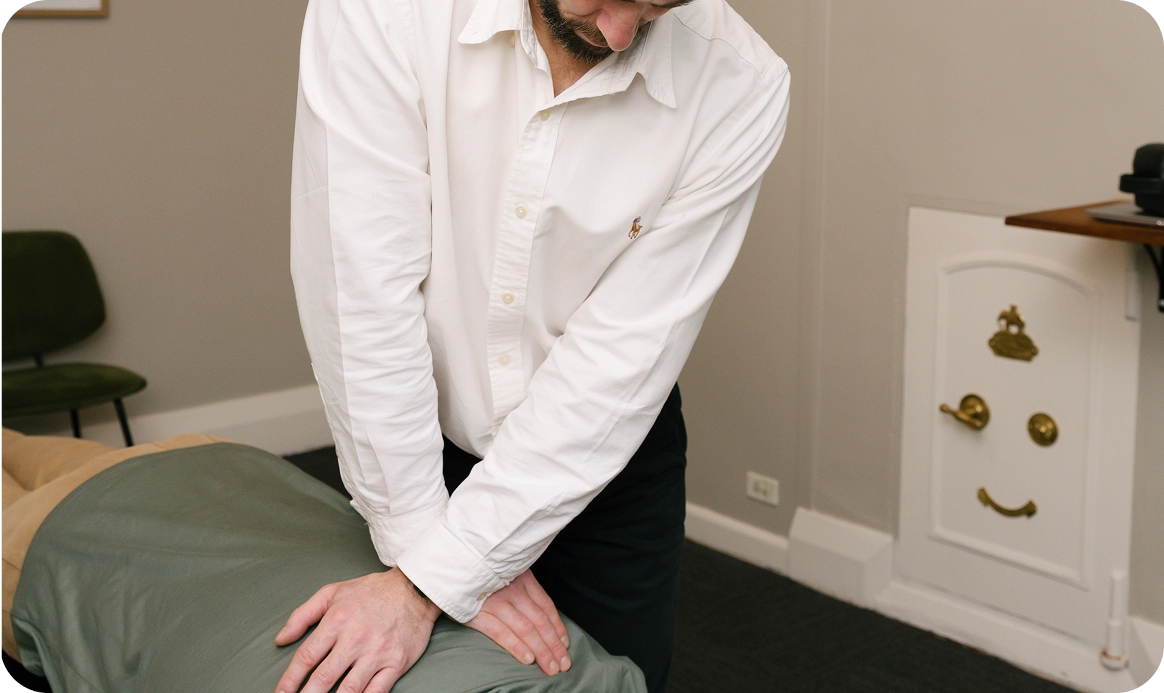
Aged Care Chiropractic in Colac
Supportive, professional chiropractic care for older adults delivered with patience, clarity and respect in a calm, accessible environment.
Stiffness getting out of the car, a lingering back ache or wondering whether chiropractic suits you later in life are common questions as the years go on. Chiropractic care for older adults at Kinfolk in Colac starts with an unhurried look at your health history, so you can make an informed choice.
Unhurried Care, Explained Clearly
As we age, the way care is delivered matters just as much as the care itself.
At Kinfolk Chiropractic, we take a considered, respectful approach to caring for older adults. Appointments are unrushed, communication is clear, and care is always adapted to the individual, taking into account your health history, any medicines you take, how you move day to day and your personal goals.
We work to make each visit supportive and well explained, so you stay informed and involved in decisions about your care.
Why Older Adults Come to See Us
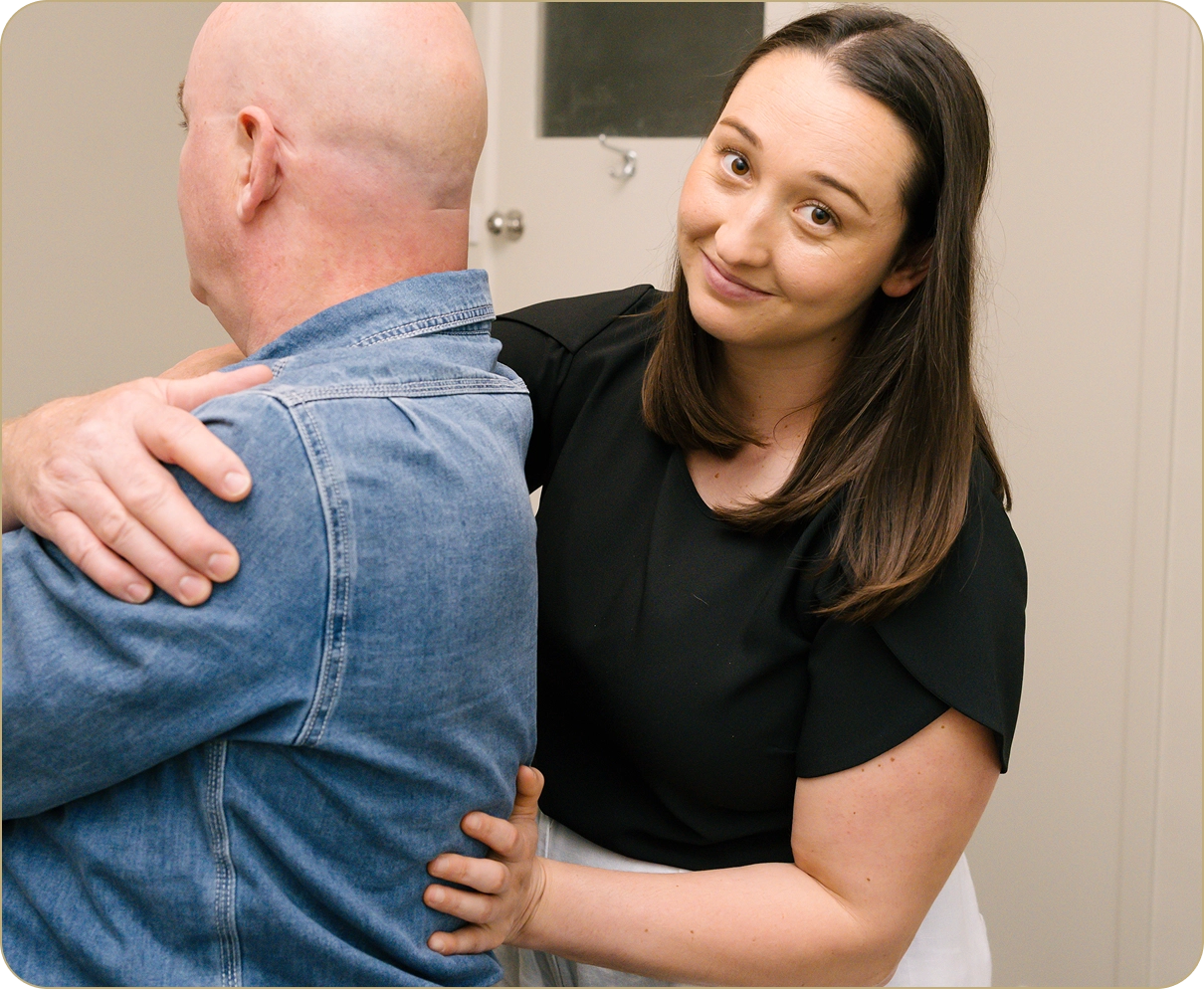
Aged care chiropractic at Kinfolk focuses on assessing and helping manage the spinal and joint symptoms that affect how you move and go about your day, alongside clear advice you can use at home. Chiropractic care may help improve mobility and reduce the risk of falls, as part of a plan that includes your GP.
We recognise that no two people age the same way, which is why care is always individualised and guided by professional assessment and clinical judgement.
Older adults commonly see us about:
- Back aches and neck aches
- Stiffness or joint symptoms that make everyday tasks such as walking, gardening or getting in and out of the car harder
- Questions about posture and the postural changes that can come with age
- Advice on movement habits and keeping up the activities they enjoy
If you have had a fall, feel unsteady on your feet or are worried about your balance, please speak with your GP first. Your GP can look into the cause and arrange a falls risk assessment or referral where needed, and we are happy to work alongside the plan they recommend. You can also read more on our back pain and neck pain pages.
Alongside chiropractic care, we prioritise education, communication and practical guidance, and we aim to help older adults feel heard, respected and involved in every decision about their care.
Your Health History, Bone Health and Choice of Technique
Before any care, your chiropractor will ask about your health in detail, including osteoporosis or low bone density, previous fractures, joint replacements or recent surgery, blood-thinning medicines, previous stroke, heart or circulation conditions, and anything that has changed recently. Please bring a list of your current medicines and any recent scans or reports. Some conditions mean certain techniques are not suitable, and your chiropractor may recommend that you see your GP before care begins.
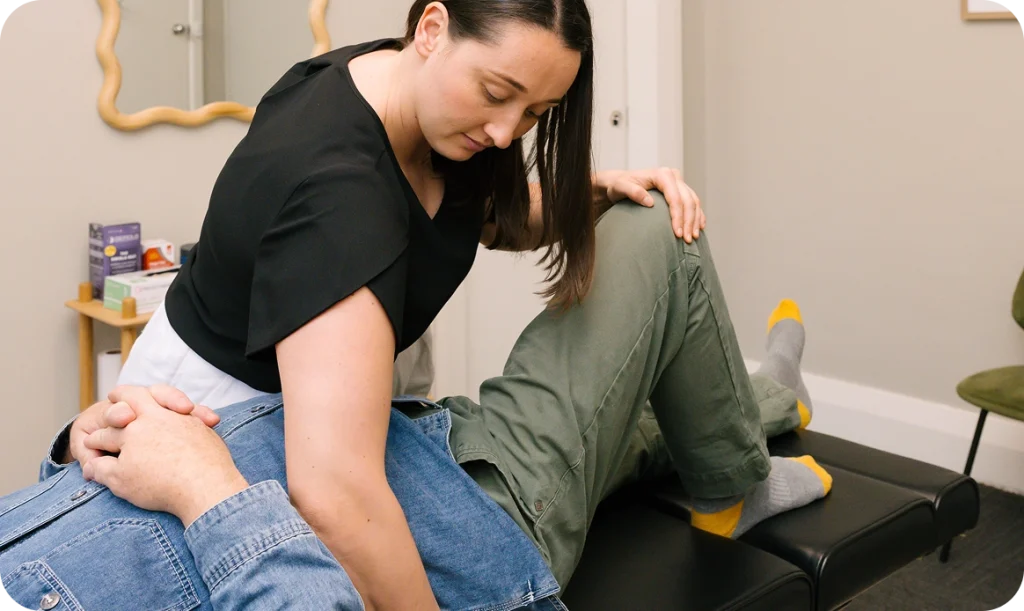
A high-velocity adjustment (the quick, targeted movement many people picture when they think of chiropractic) is only one option. Depending on your health history, care may instead use low-force techniques, gentle mobilisation, soft tissue work and simple exercises. You are welcome to ask for a low-force approach, and you can decline any technique.
As with any health care, side effects can occur. The most common are short-lived soreness, stiffness or tiredness after care, and more serious reactions are uncommon but possible (Carnes et al. 2010). Your chiropractor will explain the possible risks for you before any care begins, and you can ask questions or decide not to proceed at any time.
Working Alongside Your GP and Other Health Providers
Chiropractic care is one part of your health care, not a replacement for it. Your GP is the right first point of contact for new, severe or changing symptoms, falls, unexplained weight loss, or numbness or weakness that comes on gradually, and you should seek medical care promptly if you feel unwell. If you have sudden weakness or numbness in your face, arm or leg, trouble speaking, chest pain, new numbness around your groin or buttocks, or new trouble controlling your bladder or bowel, or you have been badly hurt in a fall, call 000 or go to your nearest emergency department straight away.
If anything in our assessment indicates you would benefit from medical review, we will recommend that you see your GP. With your permission, we are happy to share information with your GP, physiotherapist, occupational therapist or aged care provider.
What to Expect at Your First Visits
New clients at Kinfolk follow our three-visit start process, adapted to your health and needs. What happens after the first assessment depends on what we find and what you would like to do, and not everyone will need further visits.
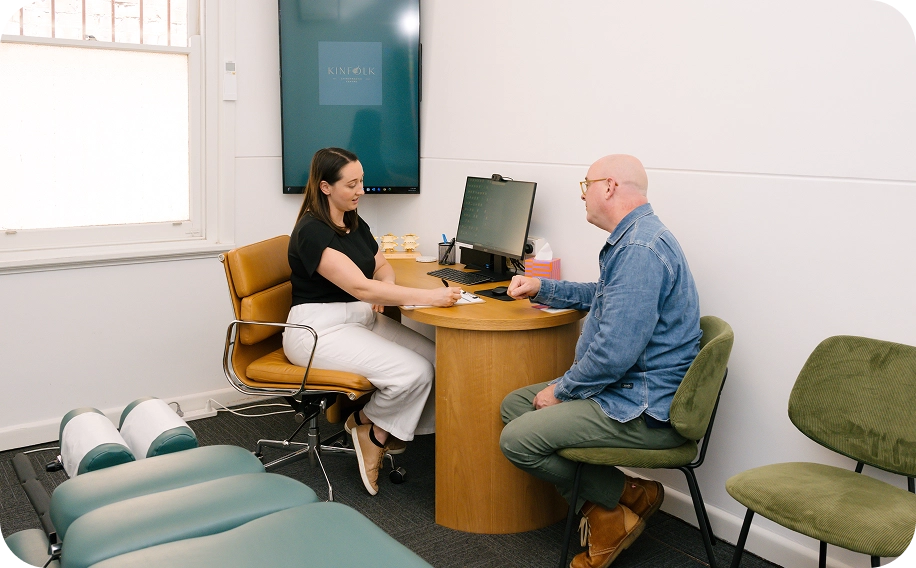
Visit One: History and Assessment
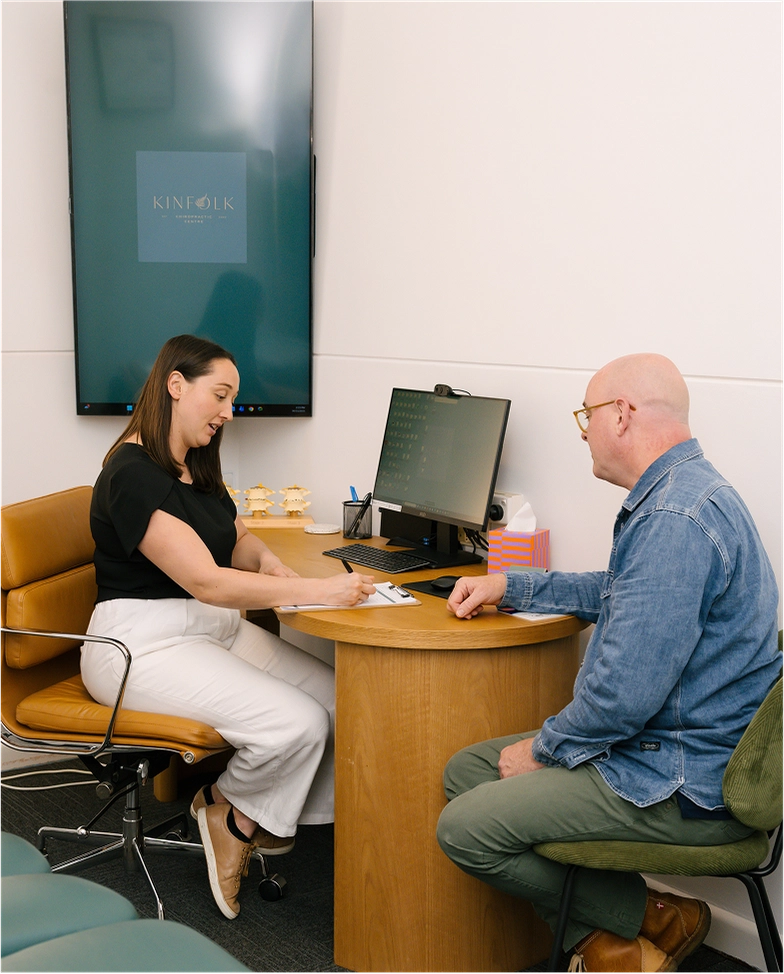
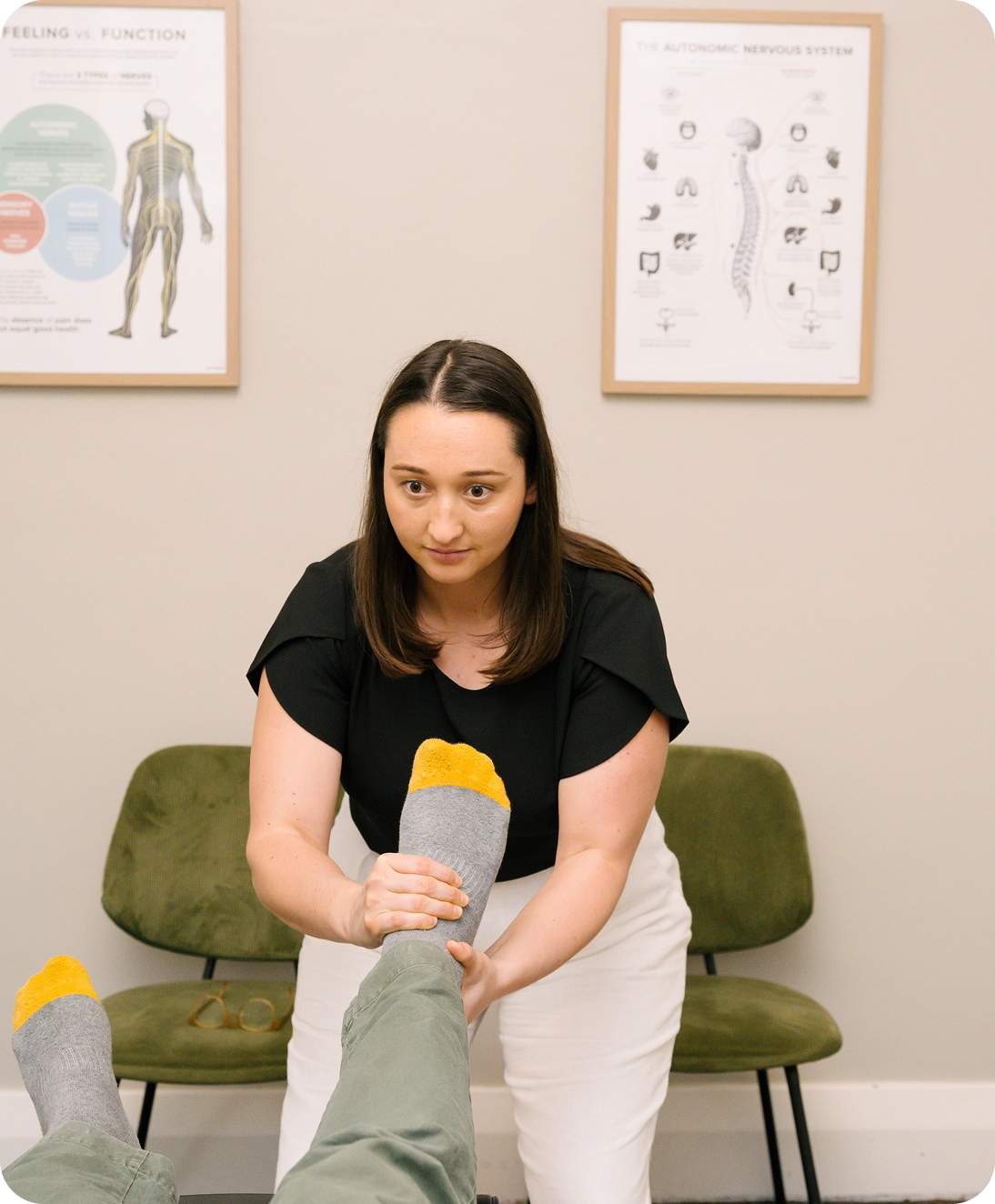
A thorough consultation to understand your health history, medicines, current concerns, lifestyle and goals, followed by an assessment adapted to your mobility. Onsite digital X-rays are only taken where clinically indicated, and always discussed with you first.
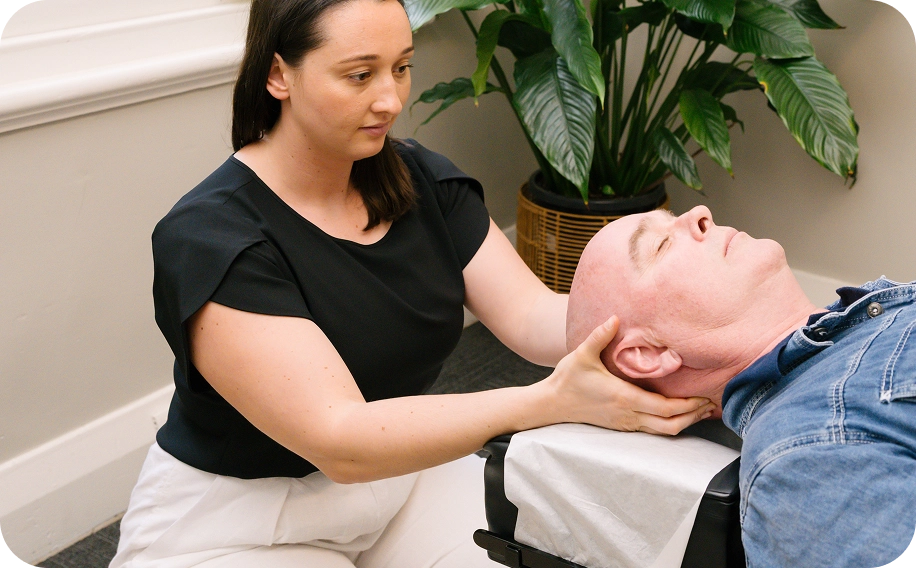
Visit Two: First Adjustment (If Appropriate)
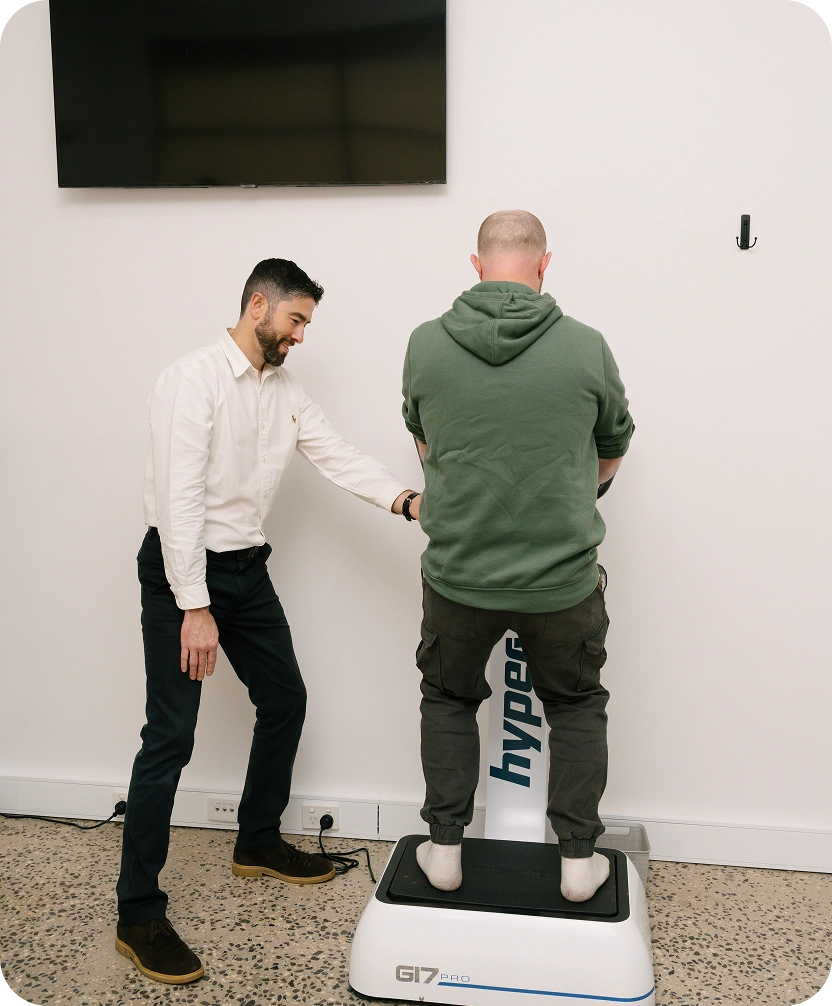
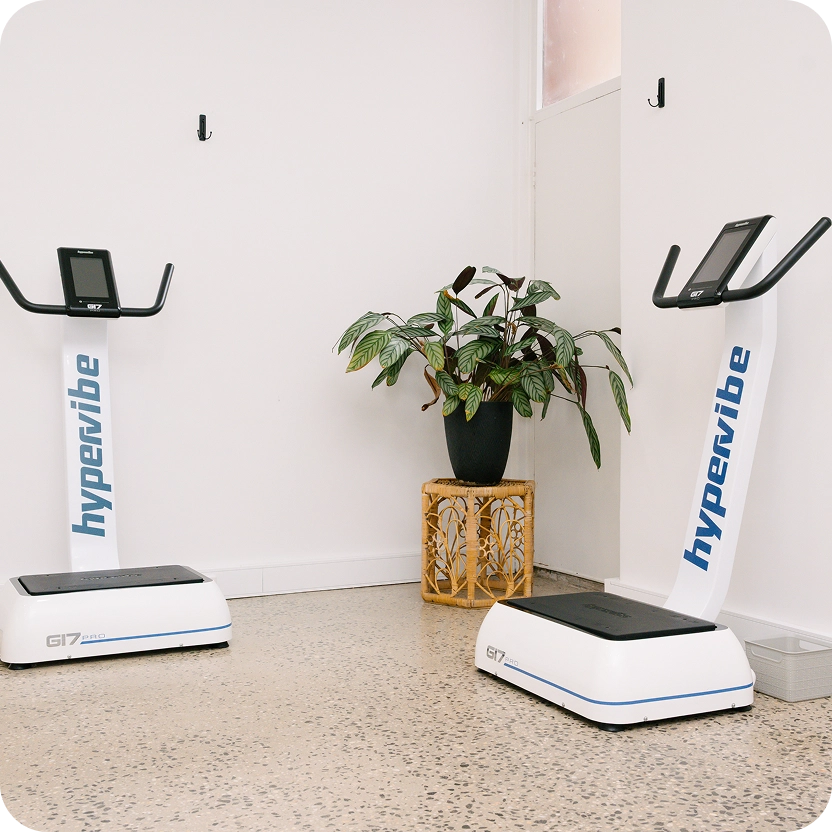
If care is recommended following assessment and you agree, this visit is your first adjustment, using techniques chosen for your health history and mobility, which may be low-force techniques rather than a high-velocity adjustment. If it is clinically appropriate for you, the visit also includes a run through the HyperVibe platforms and the yoga room. Vibration platforms are not suitable for everyone, so your chiropractor checks for this at your first visit.
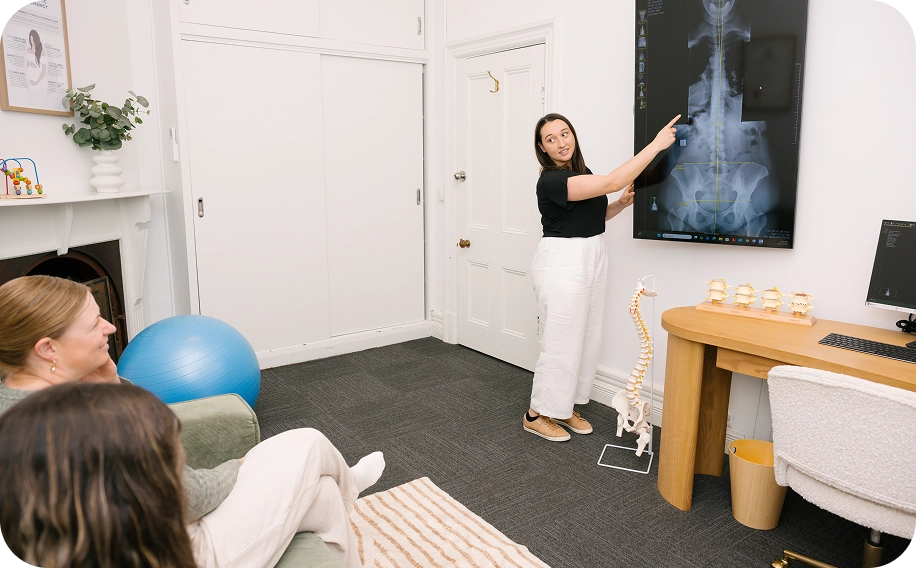
Visit Three: Your Care Roadmap
A clear explanation of our findings, a discussion of your options and time to ask questions. If care is recommended and you would like to go ahead, we build a care roadmap with you around your needs and goals. There is no set number of visits: care is only recommended where it is clinically appropriate, and you are welcome to ask questions or pause care at any time.
The Team You Will Meet
Our chiropractors and support team care for people of all ages, including older adults, and understand the importance of patience, communication and adaptability.
When working with older clients, our team focuses on:
- Taking time to listen and understand concerns
- Explaining care options and possible risks clearly and respectfully
- Adapting techniques to your health history and mobility
- Creating a calm, supportive experience
Appointments are unhurried, and your questions are always welcome. You can meet the people who look after you on our Our Team page.

An Accessible, Unhurried Centre
Kinfolk has been intentionally designed to support older adults in a calm, accessible and welcoming environment.
For aged care chiropractic, our space includes:
- Private adjustment rooms with space for clear conversation and easy movement
- A centre layout that supports accessibility and smooth flow through appointments
- Step-free access throughout the centre
- A pre-adjustment area with HyperVibe vibration platforms, used only where clinically appropriate for you
- A yoga and rehabilitation studio where you may be shown gentle movements and exercises suited to you
- Quiet waiting areas designed to feel calm and unhurried
Every detail of the centre has been considered to help older adults feel supported and at ease during their visit. If other members of your family see us too, you can read about care for the whole household on our Family Chiropractic page.


Frequently Asked Questions
Is chiropractic care suitable for older adults?
Care for older adults is adapted to your health history, medicines and mobility, and is only provided following assessment, professional clinical judgement and your consent. Chiropractic care is not suitable for everyone, and some conditions mean certain techniques are avoided. As with any health care, side effects can occur, most commonly short-lived soreness or stiffness, and more serious reactions are uncommon but possible (Carnes et al. 2010). If chiropractic care is not appropriate for you, we will tell you and recommend who to see instead.
I have osteoporosis. Can I still see a chiropractor?
Please let us know if you have osteoporosis, low bone density or have had a fracture, and bring any recent bone density results. Your chiropractor will take this into account when deciding whether care is appropriate and which techniques to use, and forceful techniques on the spine are avoided where bone health is a concern. If needed, we will recommend that you speak with your GP before care begins. Chiropractic care is not a treatment for osteoporosis.
Should I talk to my GP first?
You do not need a referral, but if you have new, severe or changing symptoms, have had a fall, or are unsure whether chiropractic care suits your health, your GP is a good first point of contact. We are happy to work alongside your GP and other health providers.
Do I need a referral?
No referral is required to book an appointment at Kinfolk. You can book online or call the clinic on (03) 5234 0800.
Will care be gentle?
Techniques are selected and adapted to your health history, mobility and preferences, and low-force options are available. Your chiropractor will explain each technique before it is used, tell you what you might feel afterwards, and only go ahead with your consent.
Can someone attend the appointment with me?
Yes. Family members, carers or support workers are welcome to attend appointments with you.
Will I need X-rays?
X-rays are only taken when clinically appropriate and will always be discussed beforehand.
Questions Before You Book?
If you or a family member have questions about chiropractic care later in life, our team is happy to answer them before you book. Book an aged care chiropractic consult online or call the clinic on (03) 5234 0800. You can also find directions and opening hours on our Contact page.